
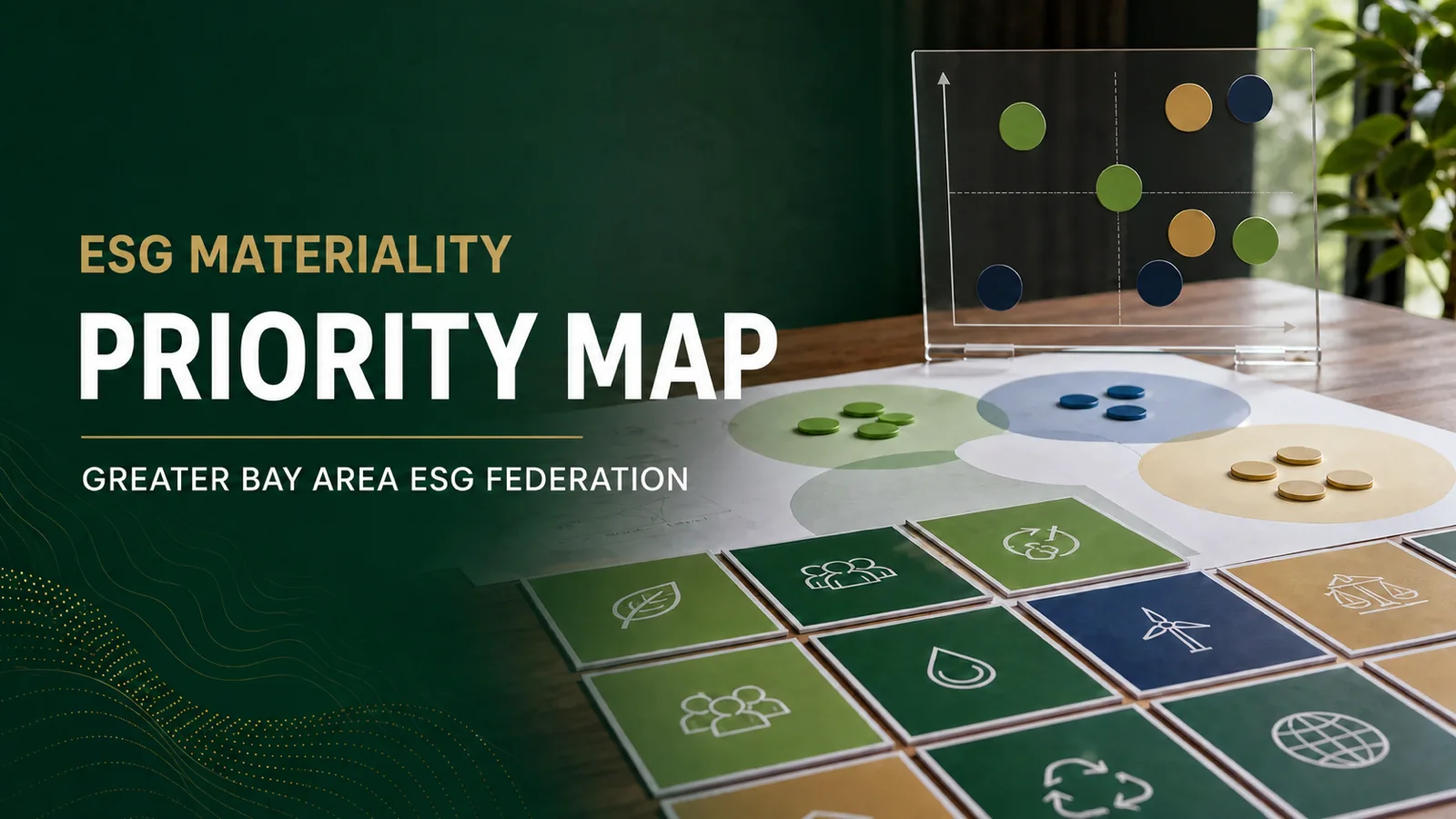
In brief: Define the purpose and reporting framework first, identify actual and potential impacts and business effects, gather stakeholder evidence, and document how issues are prioritised. The result should drive management action, not end as a colourful matrix.
Materiality means different things in different reporting contexts. Investor-focused standards consider information that could affect assessments of an organisation’s prospects, while impact reporting examines significant effects on the economy, environment and people. Organisations should state the lens used and avoid combining scores without explaining what they represent.
Set the decision purpose before collecting opinions
Clarify whether the assessment supports disclosure, strategy, risk management, impact management or several linked purposes. Define the organisational and value-chain boundary, time horizon and stakeholder groups. This prevents a generic survey from determining priorities without a decision context.
Build a long list from evidence
Use operations, incidents, grievances, regulation, sector research, customer requirements, investor questions and value-chain analysis. Describe each issue specifically enough to assess where it occurs, who is affected and how it connects to the organisation.
Engage stakeholders with relevant questions
Select participants because they have experience, expertise or may be affected, not simply because they are easy to reach. Interviews, workshops, complaints data and existing research may be more useful than a broad popularity survey. Record limitations and under-represented groups.
Prioritise and validate with management
Apply documented criteria and test the resulting priorities against evidence, strategic consequences and affected stakeholders. Senior management should approve the outcome, unresolved disagreements and monitoring triggers. The final record should explain why some issues receive more resources.
A practical implementation sequence
Link every priority to an owner, policy, risk or impact, metric and management response. Keep a watch list for issues below the current threshold and define events that would trigger reassessment. This turns materiality into a living management process.
- Define the materiality lens, purpose, boundary and time horizon.
- Create an evidence-led issue long list.
- Map affected and knowledgeable stakeholder groups.
- Score issues using documented criteria and confidence levels.
- Approve priorities, owners, actions and monitoring triggers.
For every step, retain the owner, source, reporting period, method, version, reviewer and known limitations. Estimates can be useful during transition, but they should never be presented as measured data.
Decision risks to control
- Using a stakeholder survey as the only evidence.
- Combining financial and impact scores without defining the axes.
- Publishing a matrix without owners or management response.
Retain source records, stakeholder selection rationale, interview notes, scoring criteria, confidence levels, moderation records and management approval. Protect personal information and explain where consultation was limited or indirect.
Frequently asked questions
How often should materiality be reassessed?
Conduct a formal periodic review and monitor triggers such as new regulation, acquisitions, incidents, major market changes or stakeholder harm.
Is a survey mandatory?
No. Use methods suited to the stakeholder and issue. Interviews, operational records and grievance evidence may be more informative.
Should every stakeholder have equal weight?
Not automatically. Consider affectedness, expertise, vulnerability and the purpose of the assessment, with a documented rationale.
Can financial and impact materiality be shown together?
Yes, if the two lenses, criteria and relationships are clearly explained rather than collapsed into an unexplained single score.
Authoritative sources
- GRI 3 Material Topics 2021
- OECD Guidelines for Multinational Enterprises on Responsible Business Conduct 2023
- IFRS S1 General Requirements for Disclosure of Sustainability-related Financial Information
This article is for general information and education only. It is not legal, investment, financial, assurance, certification, compliance or other professional advice.